Independent projects / Art commissions
Transit
Imagine the Future
Undermined
I went looking for a ship
La Palma Endemic Time
False Flat
Knotwilgen
Archive
Client-based work / commissions
Cultural institutions/editorial
KLM
portfolio
Pandemic hits an airline (KLM)
Shipping industry
Independent projects / Art commissions
Transit
Imagine the Future
Undermined
I went looking for a ship
La Palma Endemic Time
False Flat
Knotwilgen
Archive
Client-based work / commissions
Cultural institutions/editorial
KLM
Pandemic hits an airline (KLM)
Shipping industry
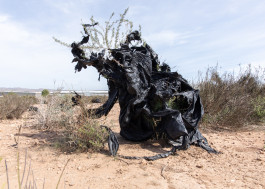
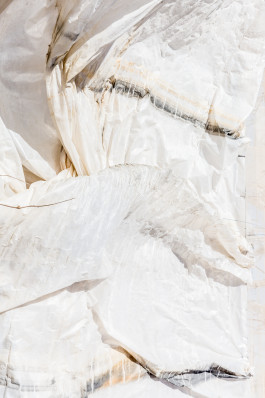
Natascha Libbert travels extensively to create her work. She has photographed toxic copper lakes in Cyprus, plantations in Spain, and gravel transport in Norway. In the photographs resulting from these travels, we often see the consequences of human actions on nature or the way in which humans bend the earth to their will. However, one must look closely to see this, for a superficial observer might primarily see a powerful composition and a beautiful image of a natural landscape somewhere far away. Those who look closely will see that the beautiful orange glow around the lake in Cyprus has no natural origin. The color is the result of the chemical processes employed in copper extraction. A rugged tree stump turns out to have been created by windblown plastic, a remnant of agriculture in Spain.
Libbert depicts the Anthropocene, the geological era characterized by human activity. She does not do so in a pamphleteering or judgmental manner, like many artists who address the subject, but with a certain moral subtlety. This is not without reason. The fact that Libbert does not shout the visual message from the rooftops, but reveals it subtly, aligns with her reflection on her own actions and her view of the moral catch-22 of contemporary life. To create her work, Libbert regularly boards a plane, and that plane is regularly the subject of the photography she provides on a commercial basis for KLM. Additionally, Libbert experiences on a daily basis the paradox of, on the one hand, a climate-conscious attitude and, on the other, the daily reality of the average producer and consumer. Her work is not a moral condemnation of the other, but a reflection on herself.
Reviews: Metropolism M, Parool


Natascha Libbert travels extensively to create her work. She has photographed toxic copper lakes in Cyprus, plantations in Spain, and gravel transport in Norway. In the photographs resulting from these travels, we often see the consequences of human actions on nature or the way in which humans bend the earth to their will. However, one must look closely to see this, for a superficial observer might primarily see a powerful composition and a beautiful image of a natural landscape somewhere far away. Those who look closely will see that the beautiful orange glow around the lake in Cyprus has no natural origin. The color is the result of the chemical processes employed in copper extraction. A rugged tree stump turns out to have been created by windblown plastic, a remnant of agriculture in Spain.
Libbert depicts the Anthropocene, the geological era characterized by human activity. She does not do so in a pamphleteering or judgmental manner, like many artists who address the subject, but with a certain moral subtlety. This is not without reason. The fact that Libbert does not shout the visual message from the rooftops, but reveals it subtly, aligns with her reflection on her own actions and her view of the moral catch-22 of contemporary life. To create her work, Libbert regularly boards a plane, and that plane is regularly the subject of the photography she provides on a commercial basis for KLM. Additionally, Libbert experiences on a daily basis the paradox of, on the one hand, a climate-conscious attitude and, on the other, the daily reality of the average producer and consumer. Her work is not a moral condemnation of the other, but a reflection on herself.
Reviews: Metropolism M, Parool